Ireland

Study Travel Writing in Ireland
June 13 to July 4, 2026
Applications for this program are now closed.
Check out the blog from past trips to Ireland!
Learn about and practice the craft of travel writing while exploring and learning about the rich history and culture of Republic of Ireland!
What is travel writing? Travel writing, by definition, is writing that describes places an author has visited and the experiences they had while travelling. The travel writing in this course will most often take the forms of personal essays and blog posts. Most of it falls into the general category called “creative nonfiction.”
Program Dates
June 13 – July 4, 2026
Course Information
WRT2711: Travel Writing, 3 credits
See below for course description, instructor information, and prerequisites.
Program Overview
- Students will strengthen their skills of cross-cultural observation and critical inquiry through note-taking and writing daily journal entries recording their experiences, observations, questions, and learning.
- Students will read about the craft and sub-genres of travel writing, with daily reading assignments. Readings will also include essays and selections on Irish history, literature, and culture.
- Students will be encouraged to develop their own lines of inquiry and specific interests about Ireland and Irish culture and seek out activities, locations, or topics to experience, visit, and study.
- Students will produce a portfolio of all their writing, including 8-10 pages of polished writing/essays.
- Students will contribute to the course blog, created for an audience of family and friends and the Landmark College community.
Ireland Study Abroad Program Details & FAQs
This 2000-level study abroad writing course introduces students to the genre of travel writing as they read and write and travel in a foreign country. The course is designed to be adaptable to a variety of study abroad locations. Students will write regularly, on the road and in the field, as they observe new landscapes and sites and experience a new culture. They will read classic and contemporary examples of travel writing, study the evolution of the genre, and apply travel writing techniques to their own writing. The course introduces students to the history, culture, and geography of the chosen country, through readings, web resources, traveling and writing experiences. In particular, students are encouraged to examine and reflect upon the cultural factors that shape the individual’s observations and experience. Credits: 3
Students will live on the campuses of large public universities in both Dublin and Galway. Housing is in single rooms, organized into suites with shared kitchen/living space.
Dublin, the capital of Ireland, is a busy, modern city. Housing is at University College Dublin, south of the city, and a 20-minute public bus ride from the City Centre. Galway is a smaller, university town, rich in culture and with a lively arts and music scene. Our University of Galway housing is a 20-minute walk (or a 5-minute shuttle bus ride) to the city center.
Daily travel may include walking, trains, public or coach buses, ferry, or taxis.
Flights for this program will depart from Boston-Logan International airport. Some students may incur additional costs to get to the departure airport to meet the group.
Flights to Ireland are usually about six hours long, but travel overnight, so the group will leave in the evening and arrive early in the morning. The group will stay busy on the day of arrival in order to adjust to local time. The time difference between the East Coast of the U.S. and Ireland is +5 hours; students should expect to experience jet lag.
At least one program leader will accompany the group on each flight.
Landmark will offer optional shuttle service between campus and the airport, with a stop in Massachusetts depending on student demand.
Students may opt out of the group flight; in this case they would be credited the amount of the flight and would make their own round-trip travel booking.
Considerations
Consider the following to determine if this course is right for your learning style.
Free time/Independence: Variable
- Students will attend class and class activities (including regular field trips) most weekdays, beginning at 9 a.m. Some days will end at noon/1 p.m.; other days will be full day trips, arriving back at residence halls at 5 p.m. or later.
- Most evenings and weekends are free time, but students are encouraged to get out and explore with classmates. Program leaders will plan optional activities for free time and support students in planning their own weekend activities.
- Students who want to explore independently will have plenty of opportunities and flexibility to pursue their own interests.
- Students will live in residence halls, equipped with kitchens, and shop for/prepare most of their own meals.
- Academic support will be provided by both Landmark faculty members.
Physical Demands and Accessibility: Significant
Our excursions often include a great deal of walking in city and rural locations, often on cobblestones or uneven grassy ground. In 2024, the Ireland group found that some days they walked several miles as a part of their group activities. The group will visit museums and art galleries; accessibility may vary. In both Dublin and Galway students will use public transportation (bus) or university shuttle van to travel to city centers, and may find some amenities such as food and groceries within walking distance of the housing.
Transitions: Low to Moderate
We stay in two locations for 10 nights each, moving Wednesday of Week Two. The schedule includes several days a week in a classroom, regular daily excursions, varying from a few hours to a full day.
Stimuli: Moderate
Dublin is a large city, although the campus of the university there is spacious and does not feel urban. Galway is a smaller city, but both city centers can be bustling, with a lot of people and sights and sounds to experience. Students will have their own rooms, in comfortable and modern residence halls.
Language Difficulty: Low
The Irish speak fluent English, albeit with an accent.
Prerequisites
This is a 3-credit, 2000-level course and requires the following prerequisites:
- Good academic standing (GPA of 2.0 or above)
- WRT1011 or WRT1008 and
- EDU1011
OR permission of the department chair, Katie Roquemore
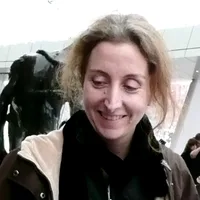
Program Director: Meg Baronian, Associate Professor of English
Meg Baronian is a Professor of Writing and Chair of the Integrated Arts Department at Landmark College.
Professor Baronian earned her B.A. in Writing from Barnard College and B.F.A. in Writing from Bard College.
.webp)
Academic Director: Sara Glennon, Professor of Writing
Professor Sara Glennon received a B.A. in English from Hartwick College and an M.A. in English from Boston University. She has taught writing and literature at Landmark College since 1991 and she is currently the College's Writing Across the Curriculum coordinator.
Program Fee: $9,350
Cost of this program will include:
- 3-credit course
- Group flights
- In-country transportation
- Field trips and housing
- Health insurance for the duration of the program
- Some group meals
Student spending can vary depending on the individual. Additional costs include:
- Most meals. Budget-friendly restaurant options are often available, and students will have access to a kitchen, including a microwave, in all their accommodations.
- Free time activities
- Cell phone costs, if students plan to activate a roaming plan or purchase a local SIM card
- Laundry
- Souvenirs, gifts, etc.
- Additional baggage fees beyond the first checked bag
Landmark College’s Global Engagement Scholarship offers a scholarship of up to 50% of the program fee. Scholarships are need-based and on average there is one scholarship available per program.
Applications for the Global Engagement Scholarship for Summer 2026 were due on January 9, 2026. Scholarships are no longer available for the 2026 summer study abroad programs.
The application for this program is now closed.