In Southern Vermont, Science Workshops are a Space for Social Change
It’s 1:30 pm on a Friday, the last period standing between 29 middle school students and the weekend. Five minutes ago, they were thinking about what they would do when they got home and who they’d sit next to on the bus. Now all they can think is, “What on earth is going on?”
The whole class just listened to the same video of a man repeating a single syllable six times, but they can’t agree on what they heard.
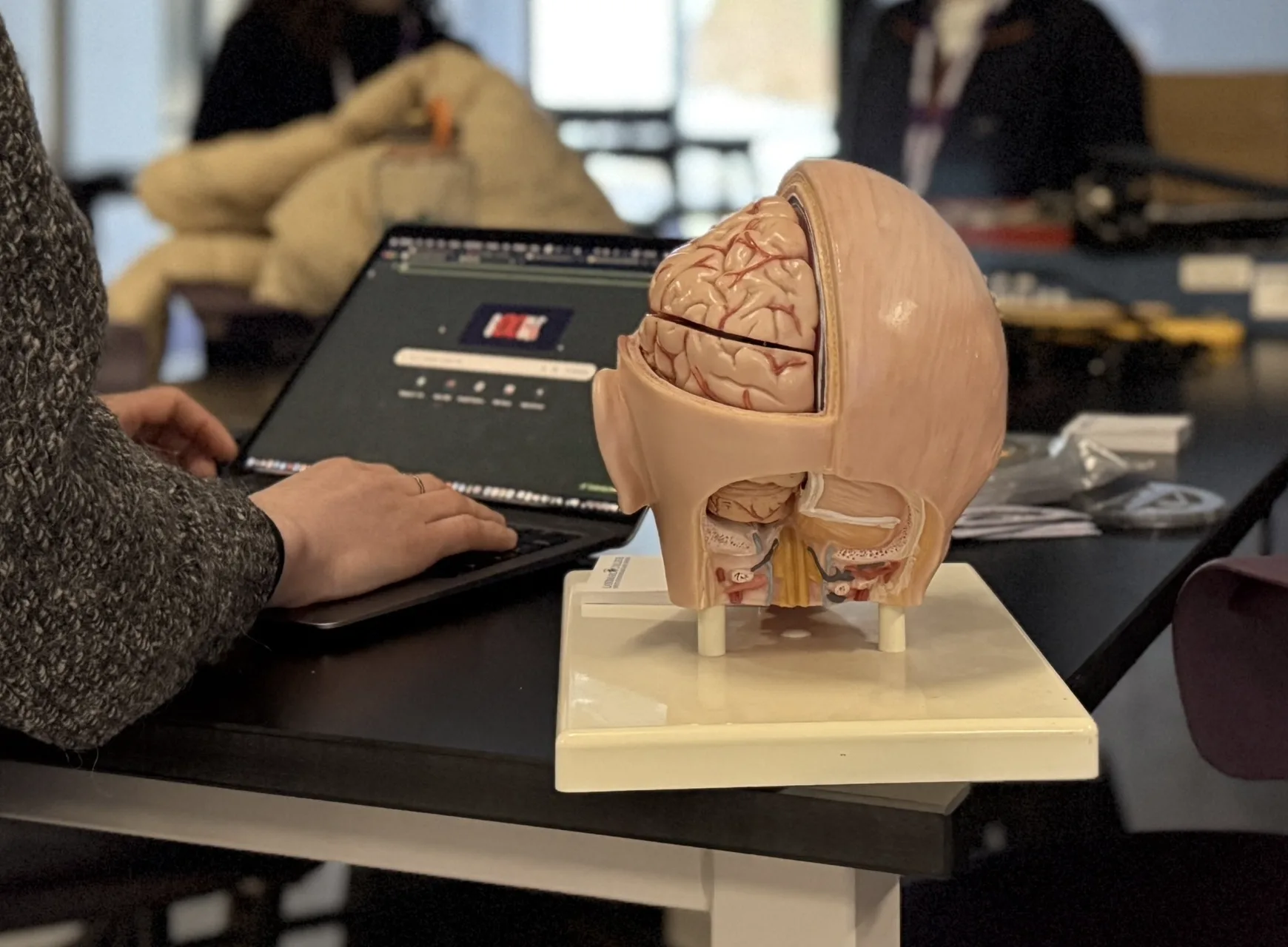
These students are experiencing the McGurk effect, an audiovisual illusion which illustrates a powerful lesson: sensory perception is far from black and white, and subtle differences between individuals can shape our lived experiences. As the lesson winds through group activities and discussion, students move from learning about how the brain works to how individual brains contribute to each student’s unique classroom experience. Soon they’re exploring how we can create safe spaces to talk about learning differences.
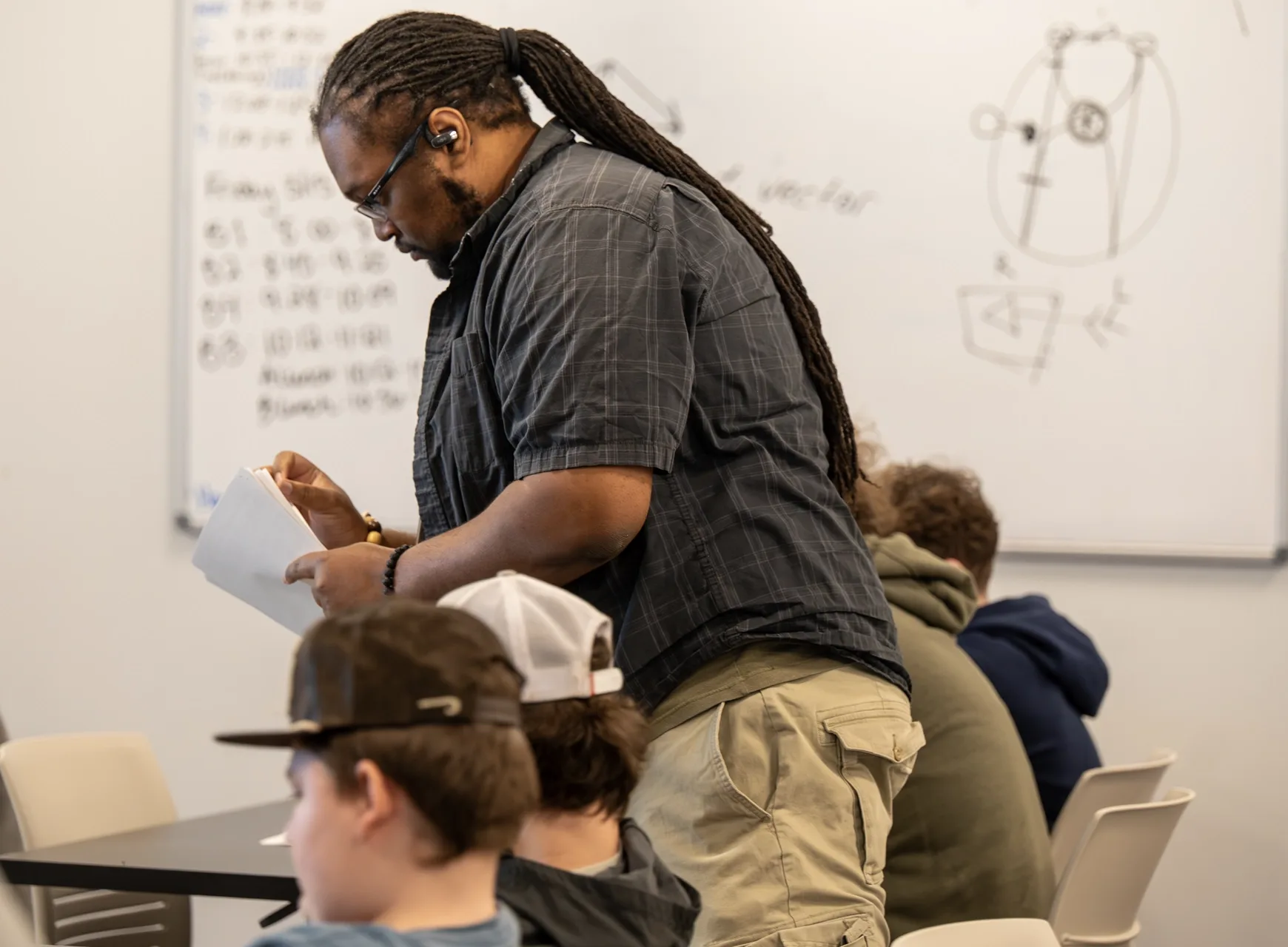
This lesson is one of a series of BrainSTEM workshops I and volunteers from Landmark College and Dartmouth College have conducted at schools in Southern Vermont. These workshops, which teach neuroscience concepts in the context of learning differences, have two goals: to encourage students to empathize with others with diverse ways of learning, and to expose students in rural Vermont to scientific career paths.
The pressure to conform to peer social norms is something of a background buzz our whole lives, but it reaches a fever pitch during late elementary and middle school. While stressful for anyone, these pressures create greater tensions for neurodivergent students for whom “acting normal” can mean a constant and exhausting performance or a deep suppression of their interests and personality.
When I arrived at Landmark College last summer after seven years in neuroscience research, I began interviewing Landmark students about their K-12 experiences in math and science as part of a grant awarded by NSF-STRIVE (STaRS: Science, Technology, and Research Seed). It’s impossible to have these conversations without recognizing the deep and unresolved pain that many of these students harbor in relation to these experiences. For a number of students, no academic or personal achievement seemed able to fully outweigh a sense of shame and habit of self-censorship developed during late elementary and middle school.
One student explained to me that after being bullied in elementary school, she felt that she had to hide her special interests: “I felt like I really, really had to mask; it was like some big, terrible secret.” Another student summarized the toll of his school experiences on his sense of academic self-efficacy, saying ”[there’s this feeling that] comes along with learning disabilities, which is the sense that you're an idiot.”
Illuminating the neuroscience behind learning differences is one step towards stripping the shame from these educational experiences, but, as I reflected in my last blog post, such explanations sometimes reinforce the idea that students’ capabilities are deterministically set by the results of a neuropsycholgoical evaluation. As a tool for social change, neuroscience literacy is far more powerful in synergy with a more integrative approach.
The neurodiversity framework, first articulated by autistic community members in conferences and online forums and later popularized and refined by academics and activists (Botha et al., 2024), situates these conversations in the context of social and environmental factors that influence how disability is constructed and negotiated (for an excellent comparison of disability models, see Dwyer, 2022). As an intellectual paradigm, the neurodiversity framework bridges the gap between medical and social models of disability, just as the BrainSTEM workshops weave together neurobiology instruction with reflection activities. Our workshops open with a neuroscience lesson but spin off into group discussions where students explore individual strengths and areas for growth, environmental factors that affect their learning, and how they can collaborate to create a more inclusive classroom.
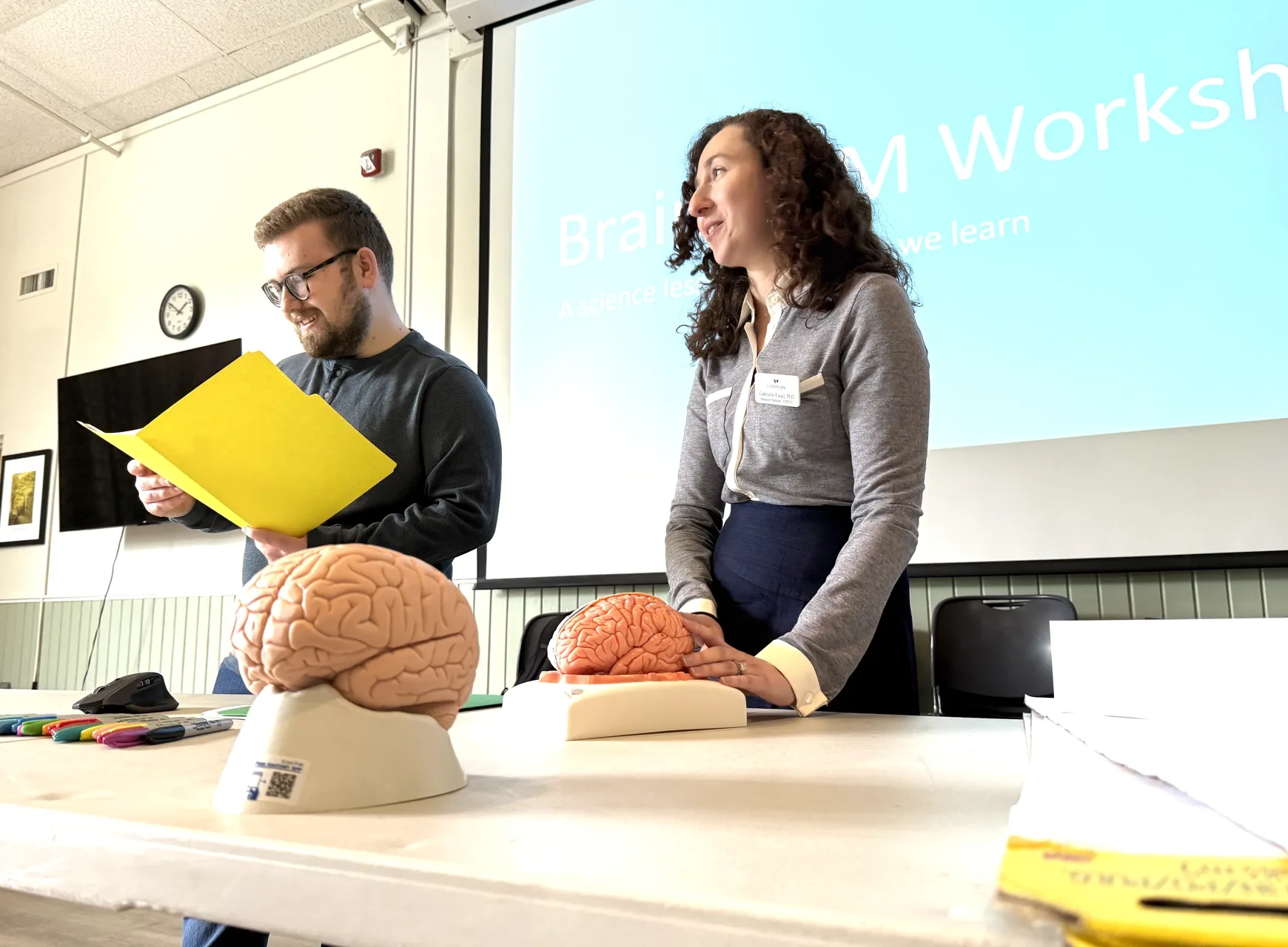
While centered around reshaping classroom attitudes on learning differences, BrainSTEM workshops also introduce students in rural areas to scientific career paths. In a recent visit to a high school classroom, one of our volunteers asked students to raise their hands if they knew what a PhD was. She was met by silence. Not a single student raised their hand. In southern Vermont and many other rural parts of the country, most students have never met a scientist. This should come as no surprise, given that 90% of tenure-track faculty come from urban areas. No wonder rural Americans report lower levels of trust in science.
This spring, we brought scientists and Landmark College students to guide BrainSTEM workshops in three schools and eight class sessions, reaching about 121 K-12 students (plus 12 teachers and paraeducators). Their impact extends beyond the K-12 students who are learning to see the value that they can contribute in a scientific career, by influencing hosting teachers, paraeducators, and school administrators to prioritize flexible, strengths based pedagogical approaches and to reconsider the pathways available to all students.
Yet BrainSTEM is still in its infancy. During the 2026-2027 school year, we plan to expand programming and develop new curriculum.
If you have an idea for a workshop, feedback on our current programming, would like us to visit your Vermont-based school, or would like to use or adapt our programming, don’t hesitate to reach out by email to [email protected].
BrainSTEM workshops are funded by NSF-STRIVE (Science and Technology Research Initiative for the Vermont Economy).