Decoding the Nonverbal Language of Learning
by Zachary R. Glowacki, Ph.D.
Research Scholar, STRIVE
You’ve probably seen it before.
A group of students are working together—maybe on a STEM problem, a design challenge, or a class discussion. At first, things appear to be going well. Then something shifts. One student goes quiet. Another looks confused. Someone else takes over. The conversation stalls.
No one says, “I’m lost.”
No one says, “I don’t feel included.”
But something has clearly broken down. For many students—especially neurodivergent (ND) learners—these moments can be pivotal. They’re not just small disruptions. They can shape whether a student feels confident, supported, or whether they begin to disengage altogether.
The Hidden Language of Collaboration
Collaborative learning is central to education in STEM and many other disciplines. It helps students build problem-solving skills, learn from peers, and prepare for real-world teamwork. But collaboration isn’t just about exchanging ideas—it’s also about navigating a constant flow of nonverbal signals.
Things like:
- A quick furrow of the brow
- An eye glance away
- A tight smile
- A pause before speaking
These subtle facial expressions can signal confusion, uncertainty, or disengagement—often before a student says anything at all. Research shows that these cues shape how we interpret others’ engagement and responsiveness (Ambady & Rosenthal, 1992; Burgoon et al., 2021).
Many neurotypical students may pick up these signals intuitively. But for many ND learners, these cues can be harder to interpret, less reliable, or even overwhelming.
Why This Matters for Neurodiversity
Neurodivergent students often bring incredible strengths to collaborative learning—creativity, persistence, and unique problem-solving approaches. But collaborative environments can also introduce hidden barriers.
For example:
- A student may not recognize when a peer is confused or disengaged
- They may miss subtle cues about when to speak or step back
- They may feel unsure how their own expressions are being interpreted
At the same time, their own nonverbal signals—confusion, effort, frustration—may go unnoticed or misunderstood by others, making it a two-way challenge in communication. When these mismatches happen, collaboration can quietly break down. And when that breakdown isn’t acknowledged, ND students may internalize the experience:
- “I’m not good at this.”
- “I don’t belong here.”
Over time, these moments can influence participation, confidence, and even persistence.
How Do You Study Nonverbal Behavior?
This is where my research comes in. To study facial expressions, I use the Facial Action Coding System (FACS), developed by Drs. Paul Ekman and Wallace Friesen (1978). FACS is a scientific method for identifying subtle facial movements—called Action Units (AUs)—that reflect underlying emotional and social processes (Ekman & Friesen, 1978; Frank et al., 1993).
For example:
- A furrowed brow that lowers can indicate confusion
- A lip press may signal anger or frustration
- A brief smile can reflect social enjoyment
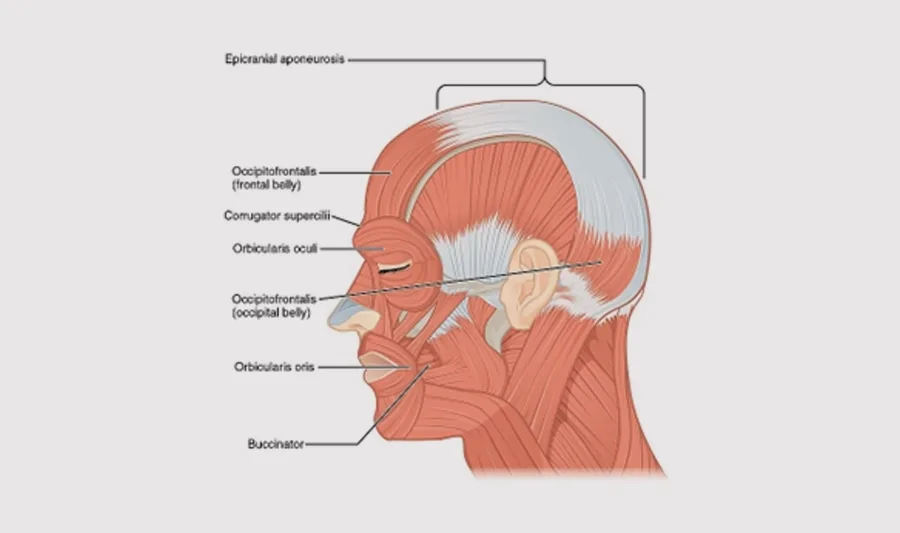
FACS has been widely used in psychology to study emotion and communication (and even inspired the TV show Lie to Me).
The question I keep returning to:
What does learning look like—before it is spoken, if spoken at all?
Looking Ahead
In ongoing work, I’m beginning to explore how these nonverbal signals unfold in real classroom collaboration—particularly during small-group STEM activities.
The goal is to better understand:
- how moments of confusion or disengagement emerge
- how they appear nonverbally
- and how we might design learning environments that better support all students
Why This Matters for Educators
For educators working with neurodivergent learners, this research highlights something important: not all disengagement is immediately visible, not all confusion is verbalized, and students experience collaboration in different ways. By paying closer attention to nonverbal behavioral signals, educators can begin to:
- Notice early signs of confusion or withdrawal
- Intervene before breakdowns escalate
- Create more explicit, supportive communication structures
For example, this might look like normalizing confusion as part of learning, building in structured turn-taking, or making expectations around collaboration more explicit.
These changes don’t just support ND students—they often improve learning for everyone.
I’ll share more about this work—including what this looks like in real classrooms—in a future post.