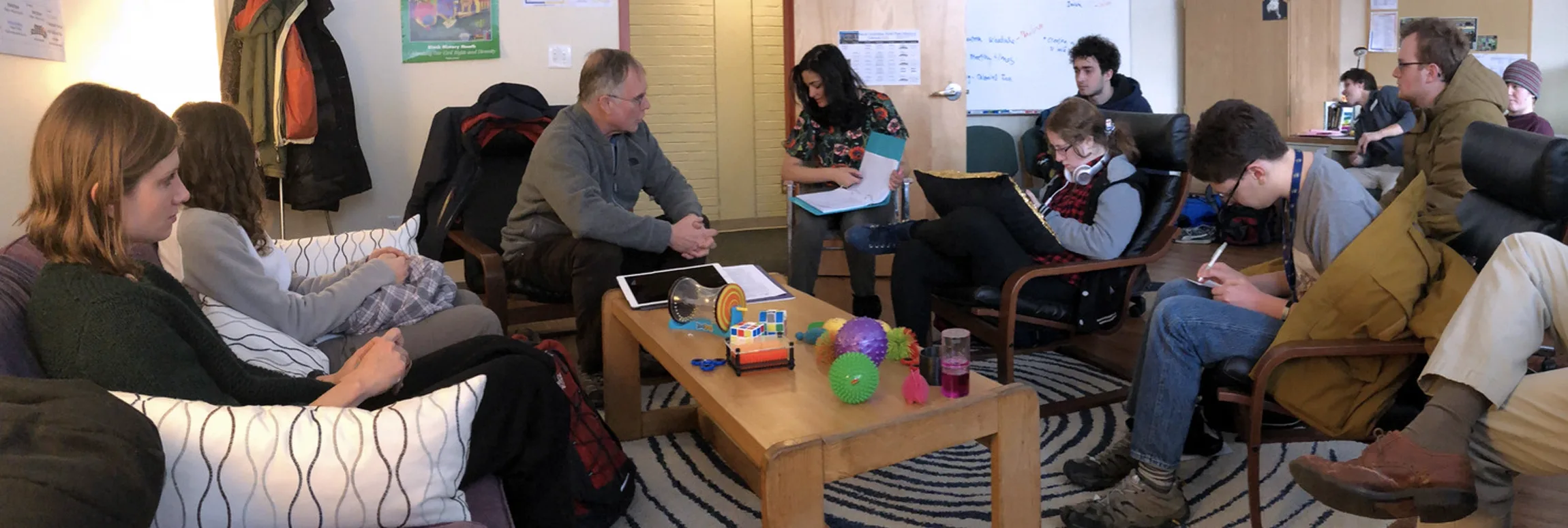
Neuroinclusivity at Landmark College
At Landmark, accessibility and neuroinclusivity are interconnected concepts that aim to create learning environments and systems that are inclusive of individuals with neurodivergent needs.
This proactive approach is grounded in neuroscience and social research, recognizing that every learner is unique and may require different methods of engagement and representation to succeed.
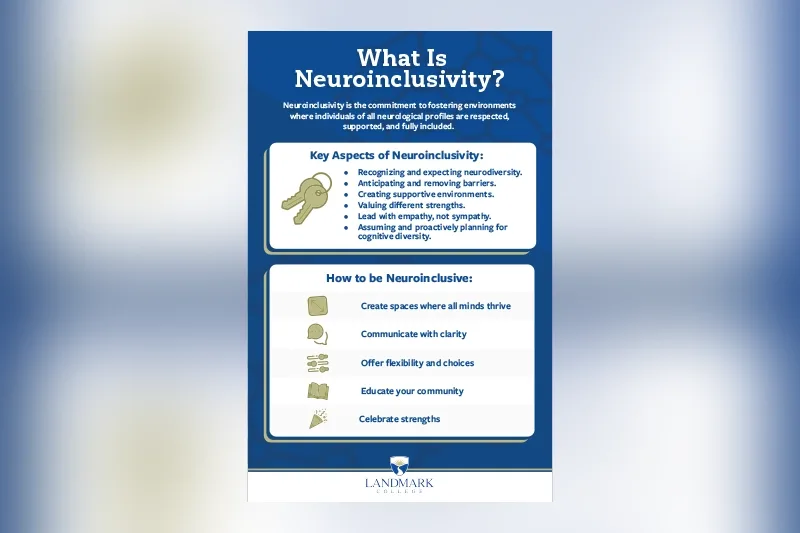
What is Neuroinclusivity? Infographic
Get a free graphic that prints as an 11x17” poster
Examples of Neuroinclusivity at Landmark College
- A Universal Design in Learning (UDL) approach to instruction
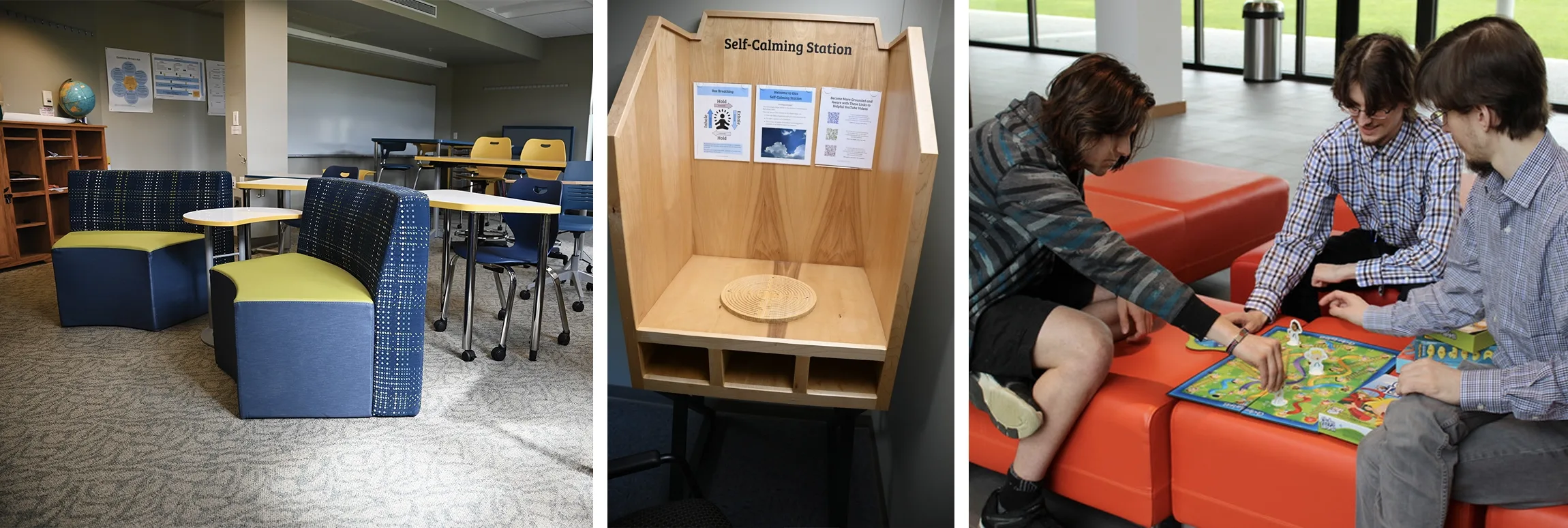
- Calming stations situated in many public buildings
- Sensory-friendly showerheads in residence halls and Click Family Sports Center
- Chill rooms in areas where students congregate
- Variable-level seating in Dining Hall, plus a separate “quiet” dining area
- Variable-level classroom furniture
Neuroinclusivity benefits everyone
- Accommodating diverse sensory needs reduces anxiety and promotes comfort
- Environments that embrace neurodiversity generate higher levels of engagement and productivity
- Welcoming spaces foster social interaction and participation in wider range of activities.
The Upper Campus Commons building currently under construction incorporates many elements of neuroinclusive design. Read more in this Architect Today article.