Monday, June 15th and Tuesday, June 16th
Charles Greening, Kilmainham Gaol:
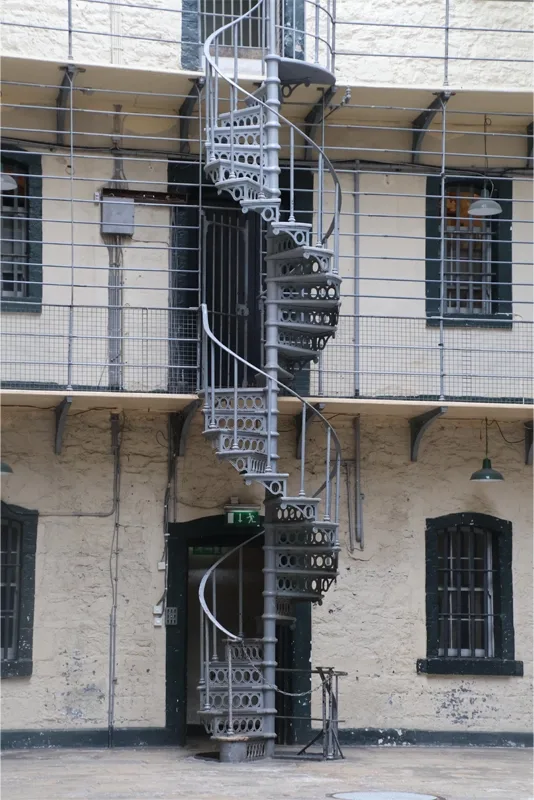
In our first week in Ireland, one event has repeatedly emerged as central to the country's national identity: the 1916 Irish Rebellion. Also known as Easter Rising, this fifth rebellion against Britain's century-long rule is widely seen as the turning point that eventually secured Irish independence. Like the four rebellions before it, this effort failed militarily and was initially unpopular with much of the public until Britain responded by court martialing and executing fifteen of the captured rebel leaders by firing squad, gradually over the following ten days. This was seen as excessive by the Irish people, so Britain effectively turned these rebels into martyrs. Nowhere did I feel the impact of the 1916 Rebellion more than on Monday, during our tour of Kilmainham Gaol, a prison that held both casual dissenters against British rule and the political prisoners of Ireland's long struggle for independence. It was here that the rebel leaders mentioned above were put to death, save for two who went on to do extraordinary things, and who are the reason I'm writing this post today.
The first is Éamon de Valera, the last of the leaders to be tried. Though found guilty, he was spared execution, likely due to the public outcry the previous executions had already caused. He would go on to become one of the most dominant figures in twentieth-century Irish politics, serving multiple terms as head of government and later as President of Ireland. The second to be spared was Constance Markievicz, a suffragette who fought for equal rights between men and women in Ireland. Though sentenced to execution alongside her male comrades, her sentence was quickly commuted solely because she was a woman. Upon hearing the news, she reportedly told her guards, 'just man up and shoot me already,' A year later, Markievicz made history in the general election as the first woman ever elected to the British House of Commons. Like many of her countrymen, she refused to take her seat in London and instead became one of the first female cabinet ministers in the world when she was appointed Minister for Labour in the newly founded Irish rebel parliament.
Jaime Hickey, Little Museum of Dublin:
On the afternoon of Tuesday, June 16th, we went to the Little Museum of Dublin, known to be a tiny but mighty museum. Even though it was small, it was jam-packed with many artifacts—items from the 1800s to the present.
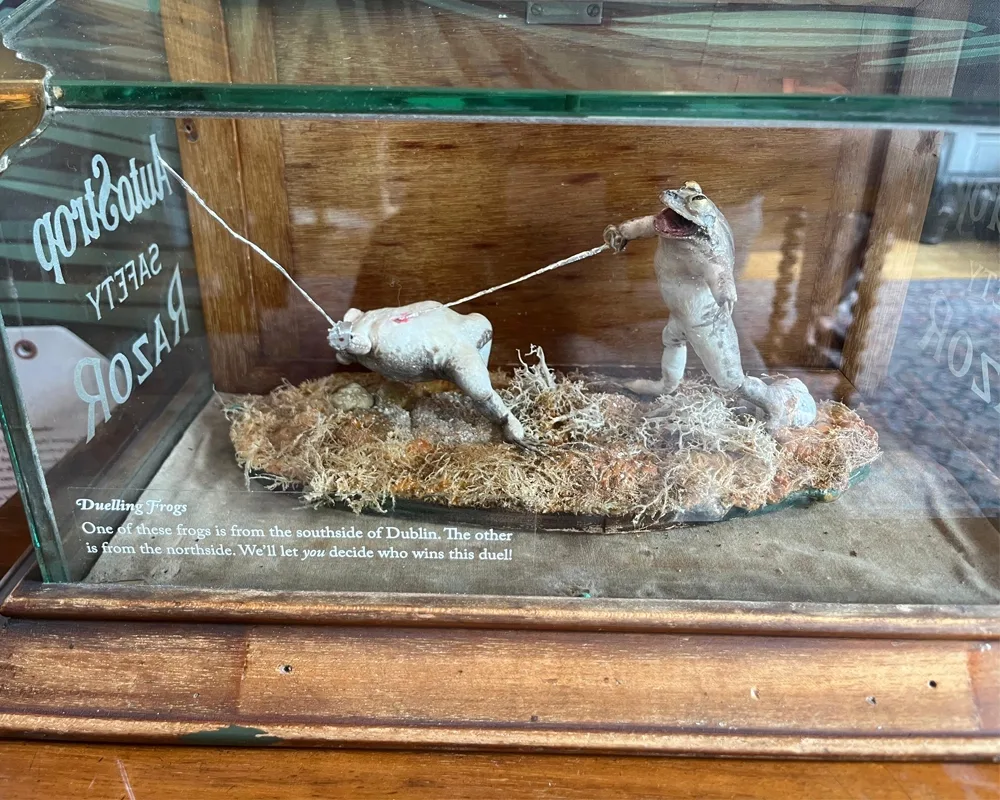
Going to the Little Museum was my favorite part of the day and one of my top favorite places we have been so far. The Little Museum used to be owned by the Heuston family. Right outside, it’s reported that the family could have seen the violence of the 1916 uprising on their streets. It’s also reported that every morning during the uprising, there was an hour pause in the fighting to tend and feed the ducks.
Danny Covino, Bloomsday:
Bloomsday! The celebration of the works of James Joyce, and particularly Ulysses. Named after the main character of the book, it’s more of an ongoing string of events than a single celebration—Bloomsday events started as early as the 11th. While we didn’t attend any single specific event, the feeling of celebration was obvious! Davy Byrne’s pub, where the novel’s protagonist stops in for a sandwich and a glass of burgundy, had a crowd almost wide enough to block the street. I think they might have been giving out boater hats.
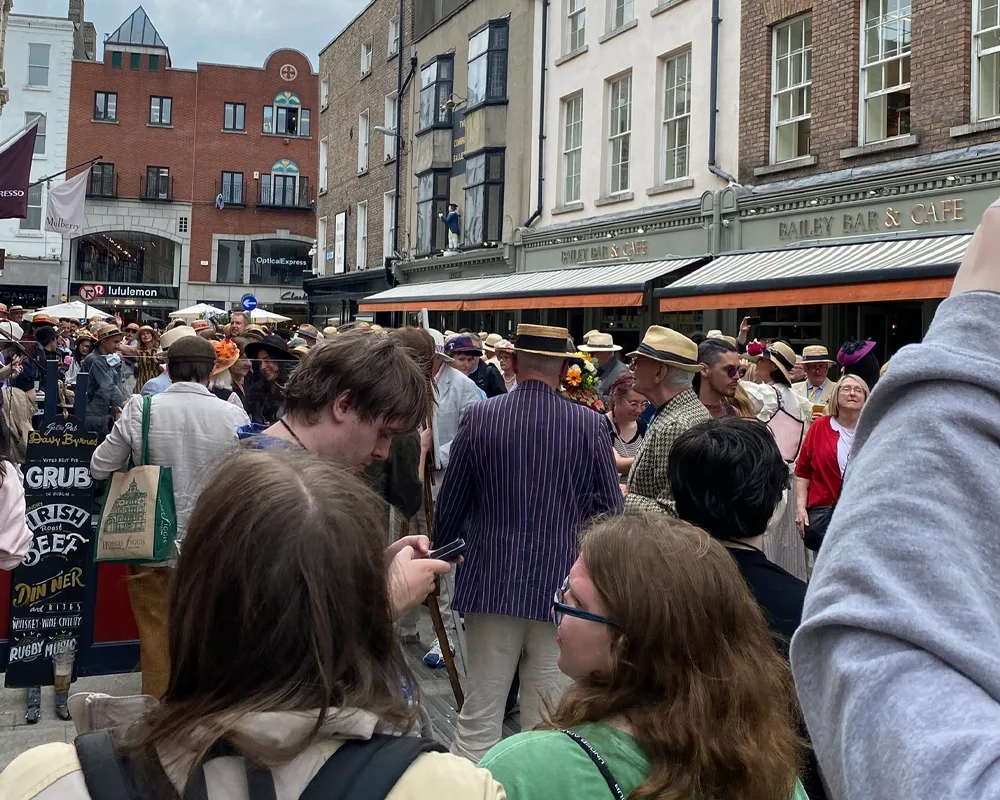
I haven’t the slightest why. But there were so many! More generally, plenty of people chose to dress up in Edwardian clothes to fit with the novel’s era. Although I’m fonder of Finnegans Wake than Ulysses, Bloomsday was wonderful. I’m the biggest fan of Joyce among the students here, and I’m excited to get to a few other places from the novel as the week goes on. Just because this is a travel writing class doesn’t mean we can’t enjoy other literature!