Friday, June 19th: Art and Architecture at the National Gallery of Art
On our final day of class in week one, because rain was predicted in the afternoon, we flipped our Friday plan of visiting Joyce Tower in Sandycove with our Monday plan of visiting the National Gallery of Art. We took the 39A bus from UCD to the National Gallery stop right behind Trinity College and while it rained outside, we took in the exhibits on the three main floors of the Gallery, starting from the top.
- Meg Baronian, Program Director
Sophia Crane
The National Gallery of Ireland is full of art from a massive range of dates. Some are from as early as the 1500s, whereas others are from as recent as this year. The styles also vary wildly, from massive paintings that fill entire walls and tower above you, to small individual photographs. There is watercolor, oil-on-canvas, oil-on-panel (ornate tri-fold panels with 3-part paintings inside), and even some statues, busts, and sculptures. Hundreds of works fill the walls across dozens of rooms, laid out almost like a maze from room-to-room.
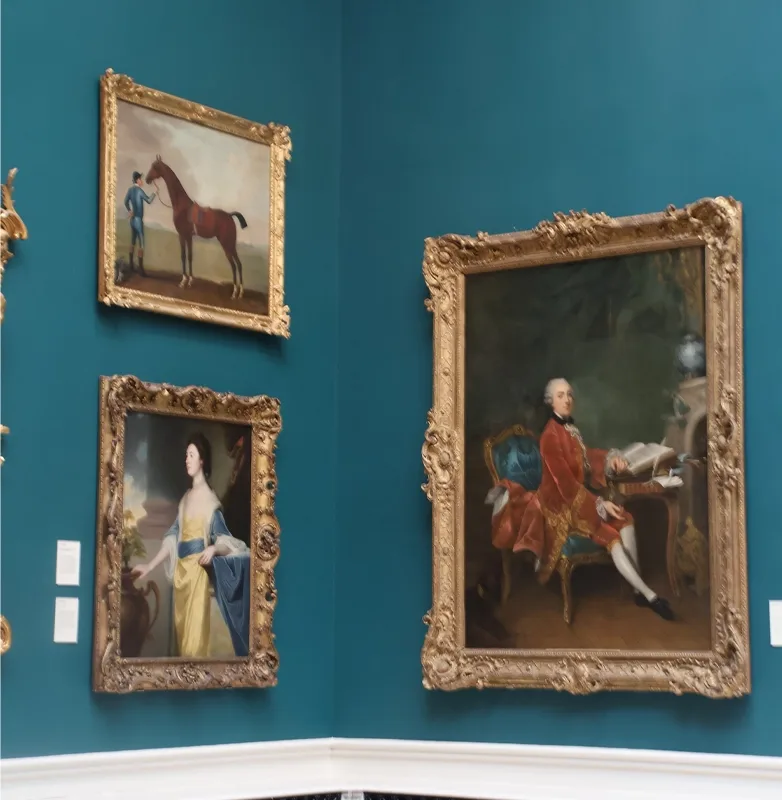
Some areas have rooms lined up such that the doorways form one absurdly long hallway, ending in a massive portrait marking the end of the “tunnel” and perfectly framing the piece even from so far away. The art comes from many different artists, including some more famous ones like Caravaggio, and Jack B. Yeats, brother of the also famous W.B. Yeats.
Sparrow Rosenbaum
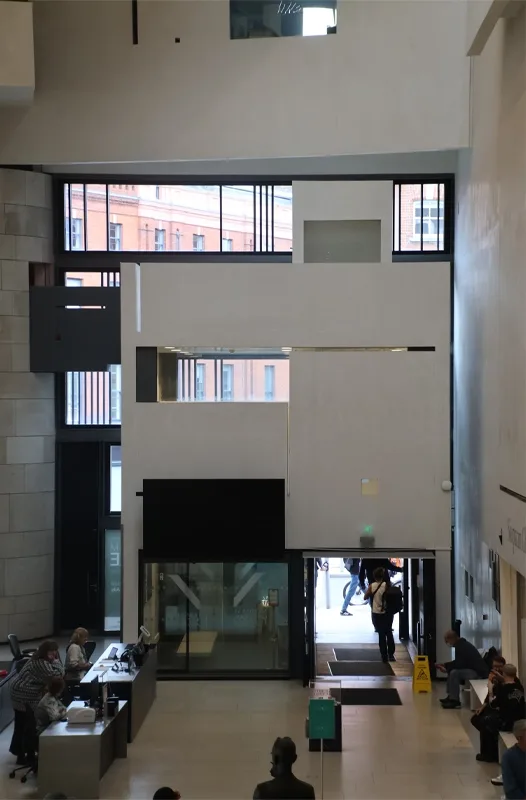
The architecture of Ireland’s National Gallery intrigued me. The first two floors were themselves modern exhibits of clean-cut corners and white paint, as the interior of the building specialized in jagged edges and rectangular shapes. It seemed to want to give the paintings moments to shine on their own, while still maintaining their own character.
However, the third floor was different, and my personal favorite. Deep crimson and cerulean walls sat in the backdrop, giving the rooms a rich feel that made me feel like I was in a medieval palace. It fit the Renaissance era paintings quite well, befitting nothing less than Ireland’s National Gallery.
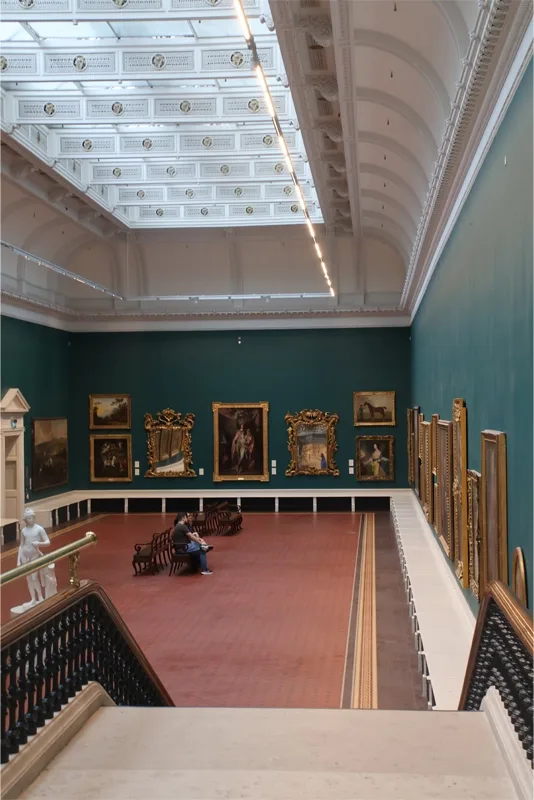
Three Architectural Details: photographs by William Shetley
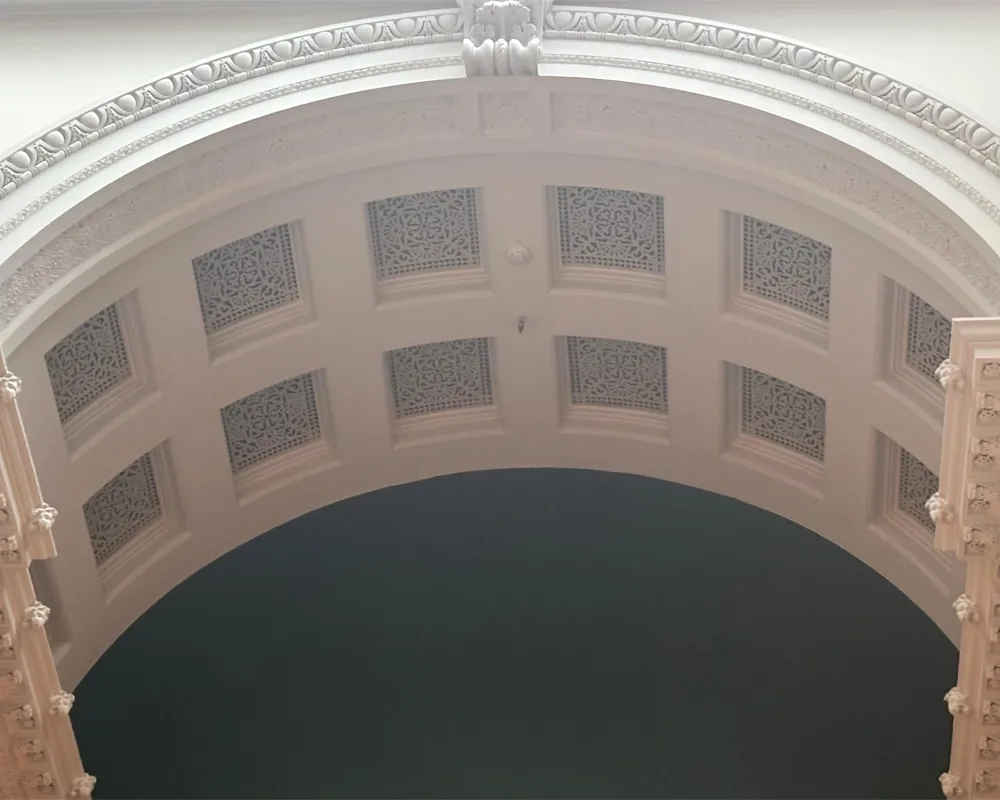
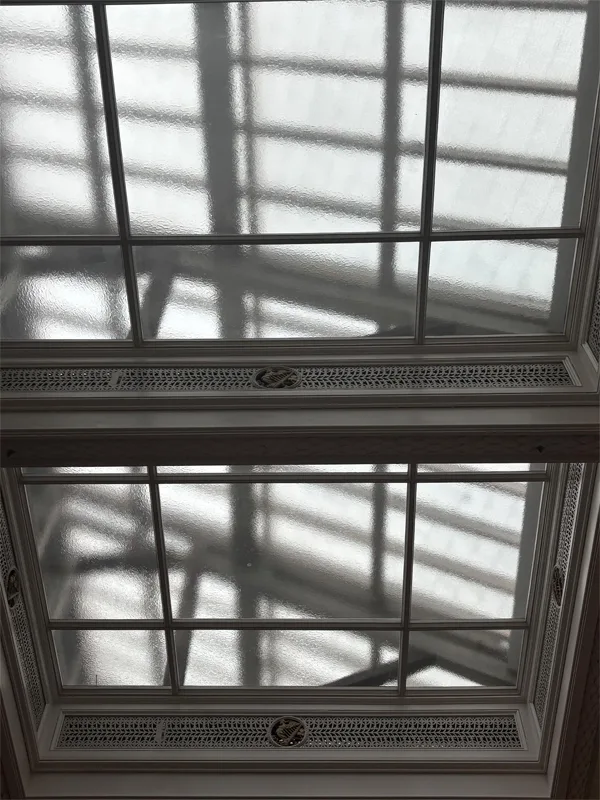
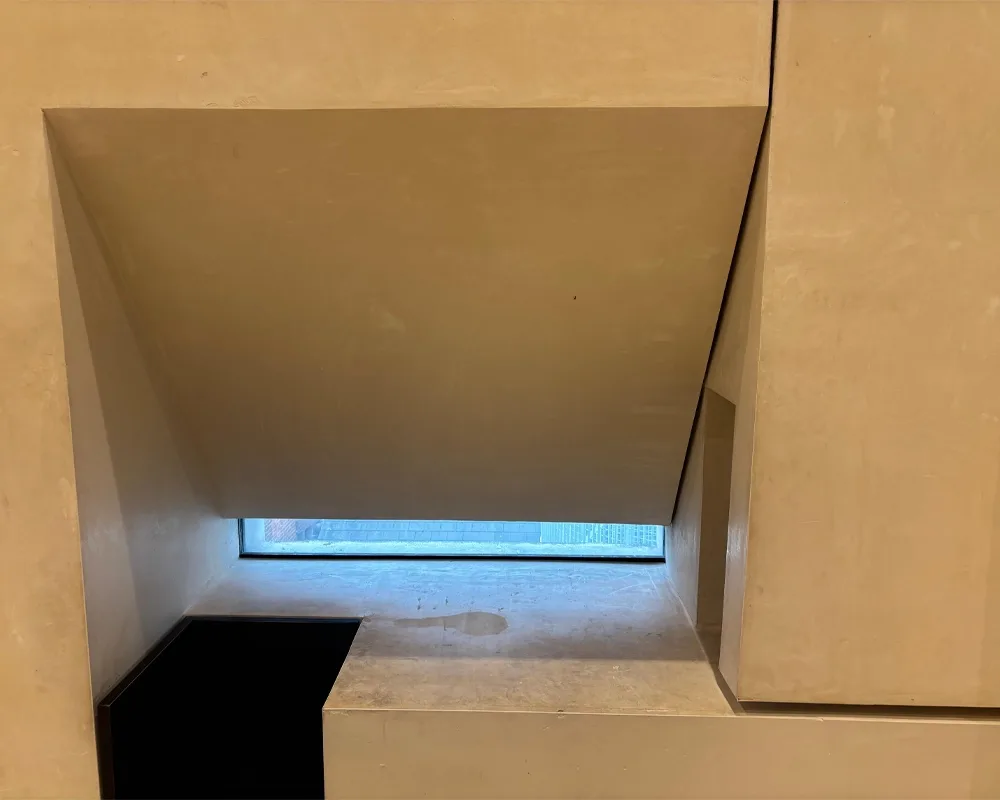
Most of us ended the visit to the National Gallery at the café on the first floor and got coffee, tea, and pastries, or we visited the gift shop, or we did both. From there, some stayed in town, and others travelled back to UCD. The collection at the National Gallery is impressive and so is the architecture. It was a great way to end the first week.
- Meg Baronian, Program Director