TeamLab Planets TOKYO
[Text and images by students Gabe Kwok and Blu Mabley-Ward]
In addition to the activities that were specifically part of their studies, students were offered opportunities for additional Landmark-sponsored, professor-led excursions. One of these was to TeamLab Planets, an extraordinarily unique experience that used cutting-edge digital projection technology — as well as sound, scent, and in one gallery water — to create and immersive museum experience. Several students opted to attend, and below are images and excerpts of longer reflection writings by two of them — Gabe Kwok and Blu Mabley-Ward — which paint a picture of a deeply moving and thought-provoking visit.
— Luke Strosnider, Assistant Professor of Photography and Program Director
Gabe Kwok

TeamLab Planets is a museum unlike any art museum I've ever experienced. It's multisensory, affecting all your senses with different lights, sound, water, movement, and more. It feels borderless, not limited. It felt like an open ocean, like standing in the vastness of space. Because of this experience, it's different from anything I've ever experienced in my life. It's a museum where you explore freely, but there is a set of experiences you can choose to do. It saturated my senses with such sensation that it opened my mind up to such wonders that no words can describe how I feel about it, not because I don't have words, but because I don't know the proper word for it. Nothing. The mindset of looking at things differently, experiencing, and taking your time to feel the emotions the art invokes in you is just amazing.
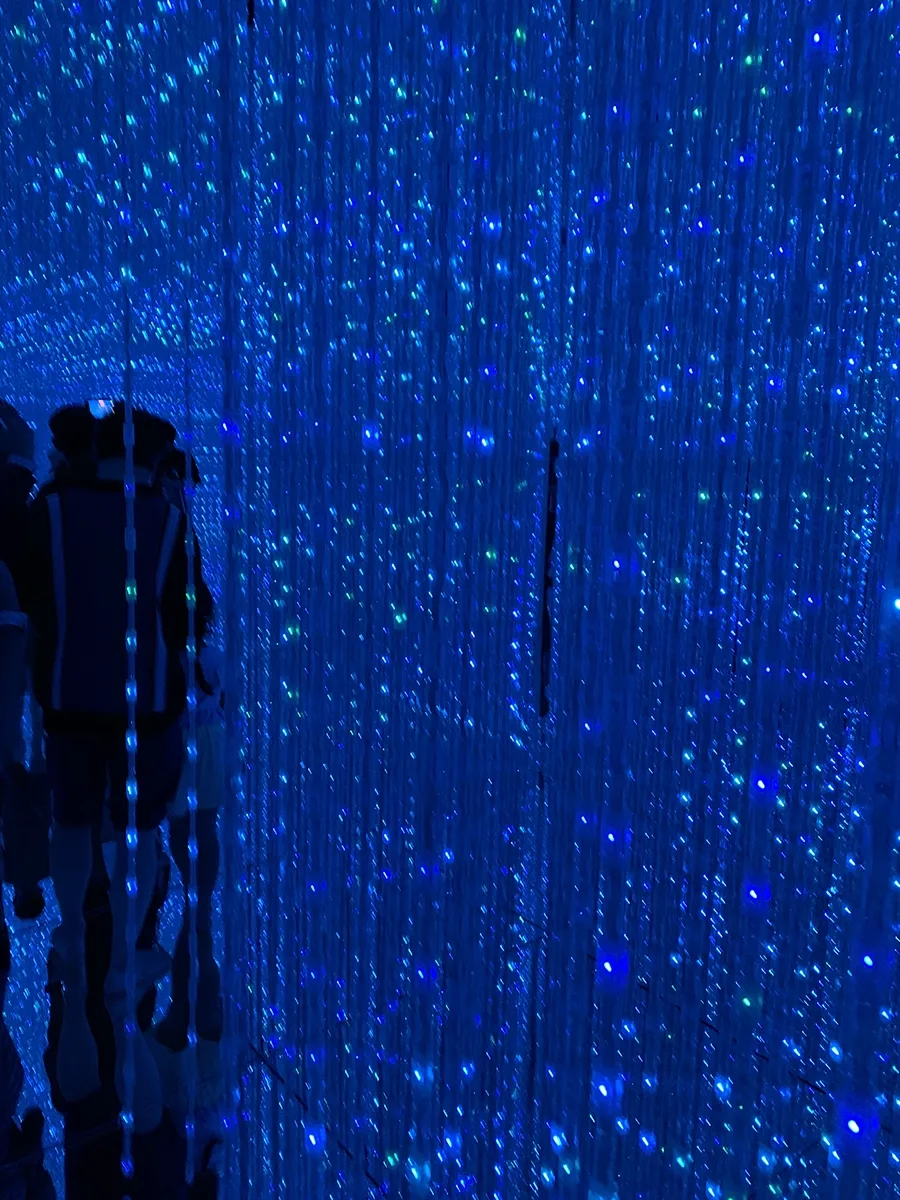
I went into a room full of what appeared to be lights; however, they were purposeful representations of stars. They glowed in patterns that changed along with the music. We looked at them as if we were in endless space—an abyss, but not quite an abyss. The mirrors reflected the patterns, creating an endless night and a sense of infinite possibilities. It made me feel small, yet safe, fearful, and wondrous all at once—as if I were standing in the vast expanse of the universe or even the galaxy.
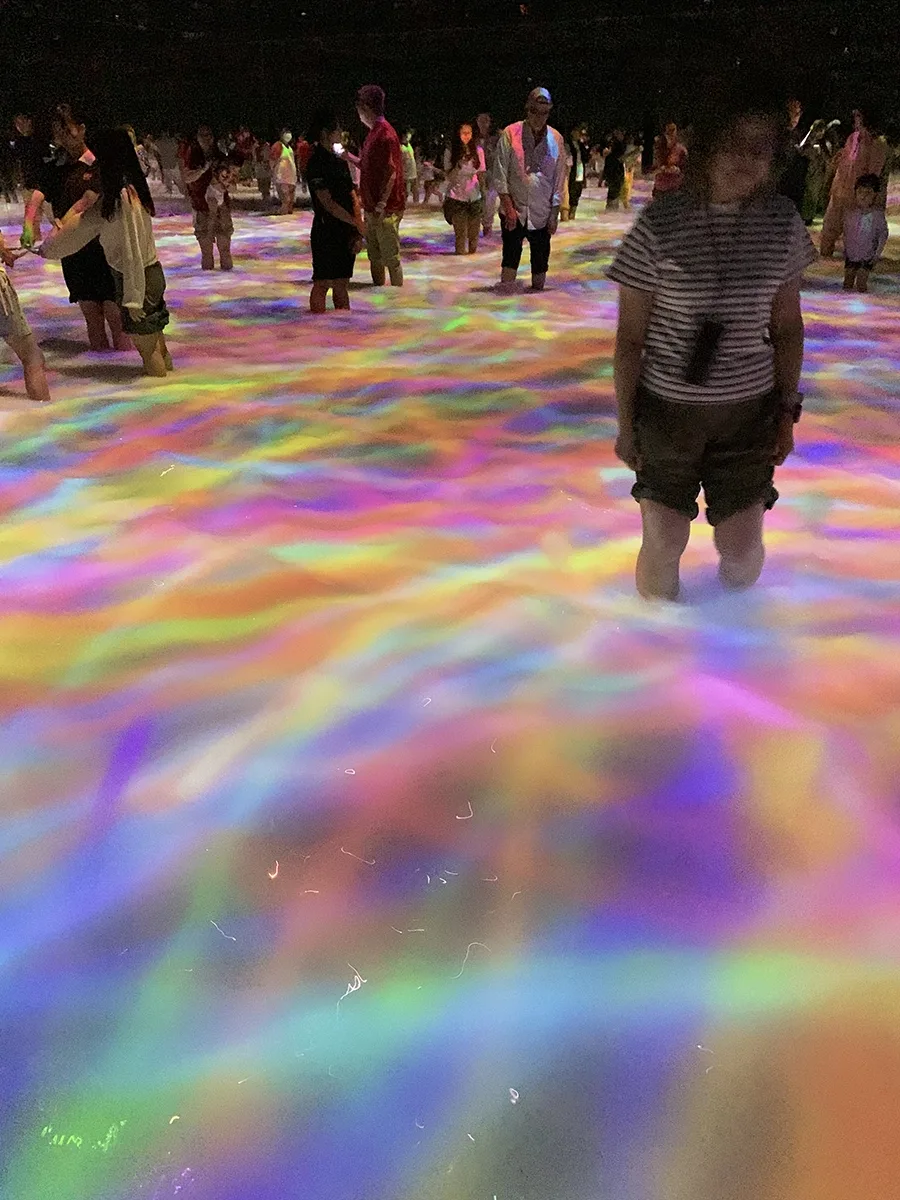
I didn't really understand what it meant to be immersed in art until I was in the water room. In this room, where we felt water on our feet, saw projections of different fish, and interacted with them, it was just mind-blowing. The senses aren't just fooled; they're immersed in the world of the ocean, as if you're on the beach, as if you're there, with water filling your feet, seeing the fish everywhere, seeing the color, seeing the wild beauty of it. It's just breathtaking. The experience of the two I've had so far when I was in the museum opened my mind to the possibilities of what art really means in Japan. It's not just about being part of it; it's about how the artist wants the viewer to experience it, how they can try to understand what the artist is trying to give the viewer, how they should understand it, how they should experience it.
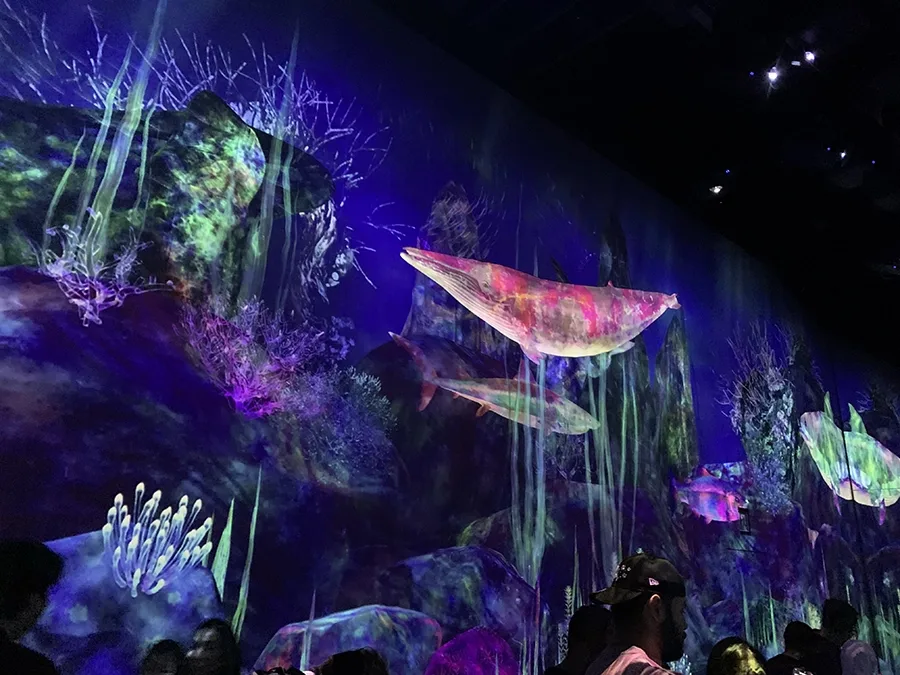
The next part was a forest area displaying pictures of extinct animals from long ago. The sounds, colors, and even the atmosphere made you feel as if you were there, looking at these animals that looked back at you. It was beautiful.
Overall, the museum was a fantastic trip. It was fun and energetic, and so immersive that I felt pleasantly overwhelmed. I couldn't believe how much emotion and sensation was given to me.
Blu Mabley-Ward
TeamLab Planets Tokyo is an immersive art experience that I visited last weekend. TeamLab Planets merges technology, art, nature, and Japanese culture into one interactive experience. It is made up of several different rooms or areas, most of which have mirrors on the ceilings, walls, and floors to create an infinity room where the whole room is reflected making it look like the room keeps going. The rooms were filled with either physical objects or projections. Some objects that were featured are crystal-like strings of beads, flowers, and large light up balls. The projections were of things like koi fish, extinct animals, and flowers.
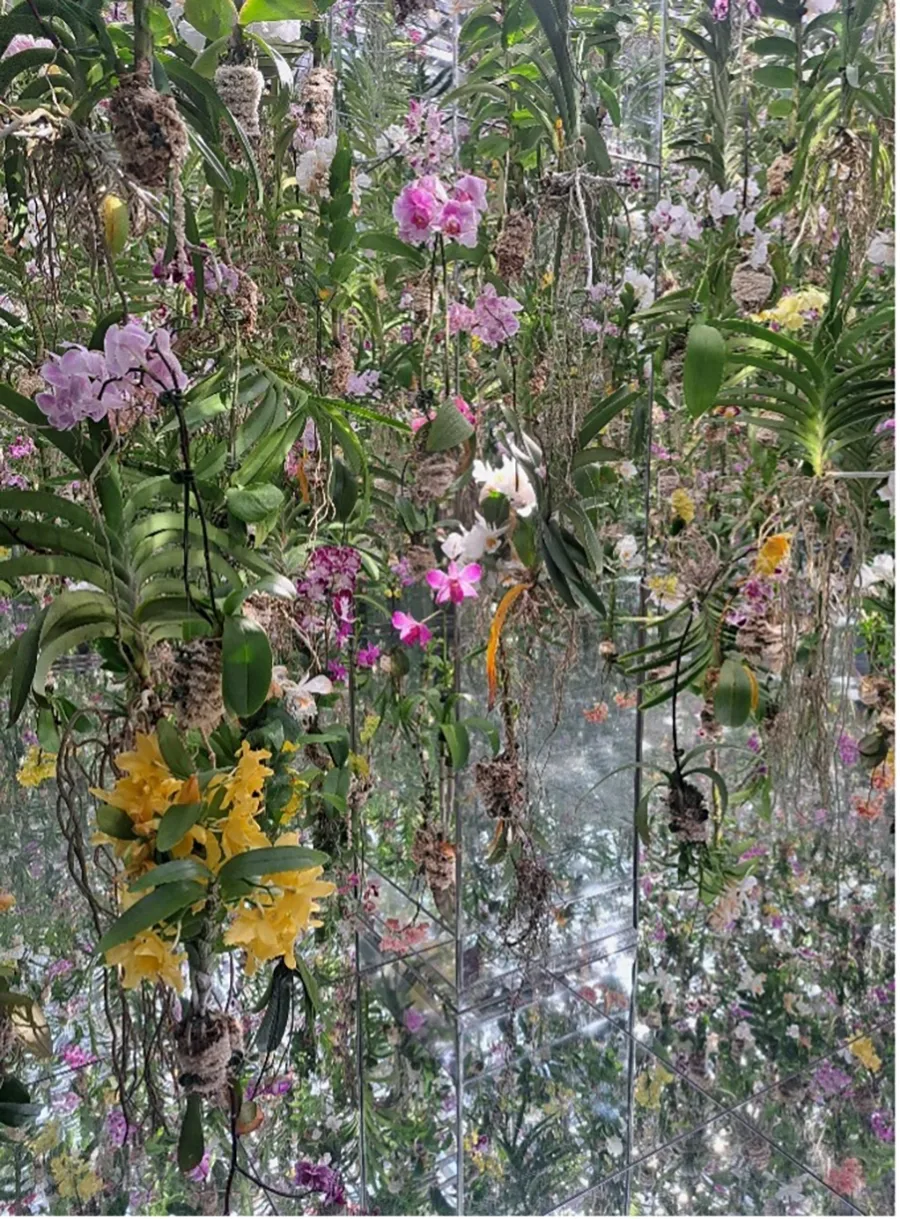
The art was also technologically advanced, using projections and machinery that allowed parts of the art to move. The artists also utilize AI to make the art react to the people in the room. The AI allowed the projections to not be a set loop of footage but rather a continuously changing and moving projection.
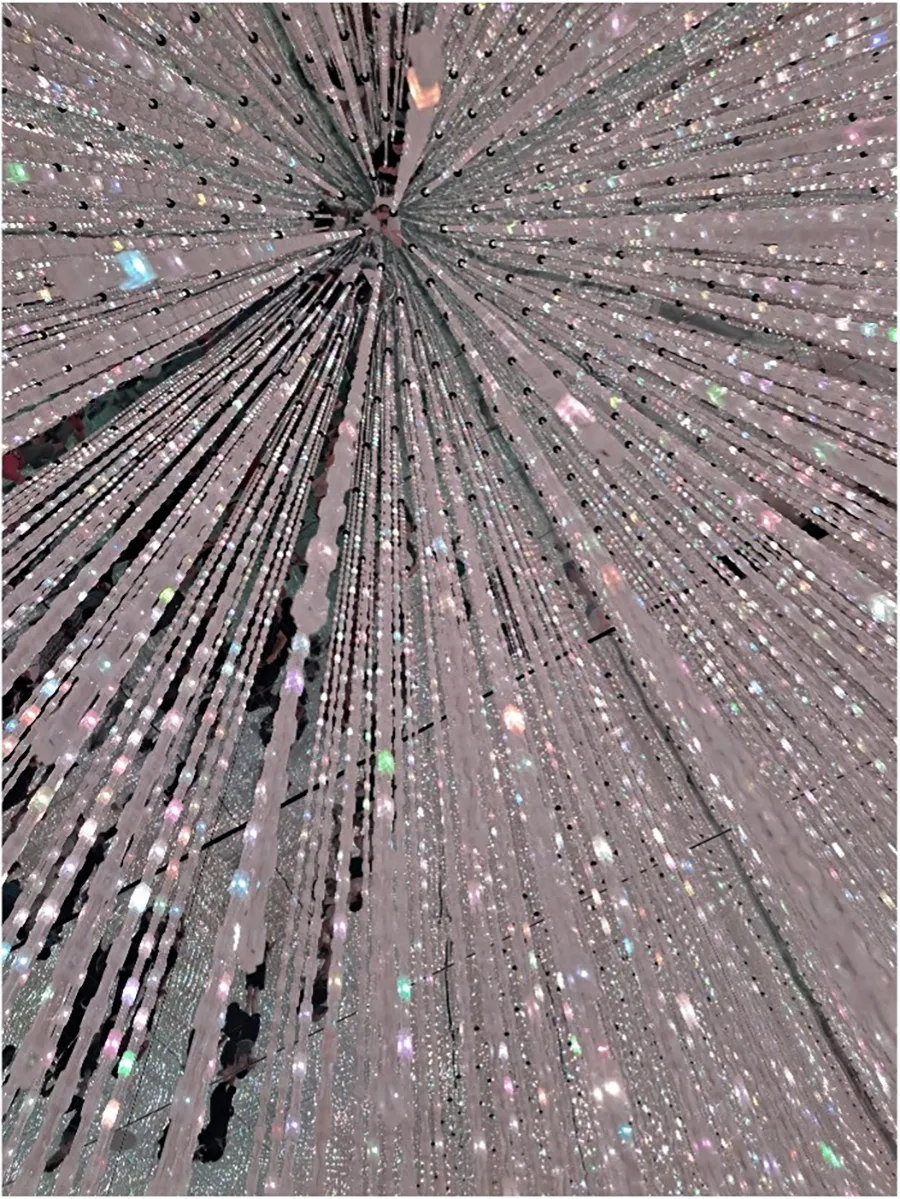
Reflecting on my experience at teamLab Planets, I couldn’t help but connect it to mindfulness and meditation, which surprised me because I actually enjoyed the experience. In the past mindfulness exercises have been something that I haven’t enjoyed. When in school mindfulness typically involved being forced to sit silently in a room full of fluorescent light and people I didn’t like staring at a wall or ceiling. With my ADHD and getting too in my head any form of meditation or mindfulness has felt out of reach. To an extent this experience changed that for me, I am still unlikely to sit and stare at a wall trying to meditate, but I feel like I was able to reach a state of mindfulness inside this experience.
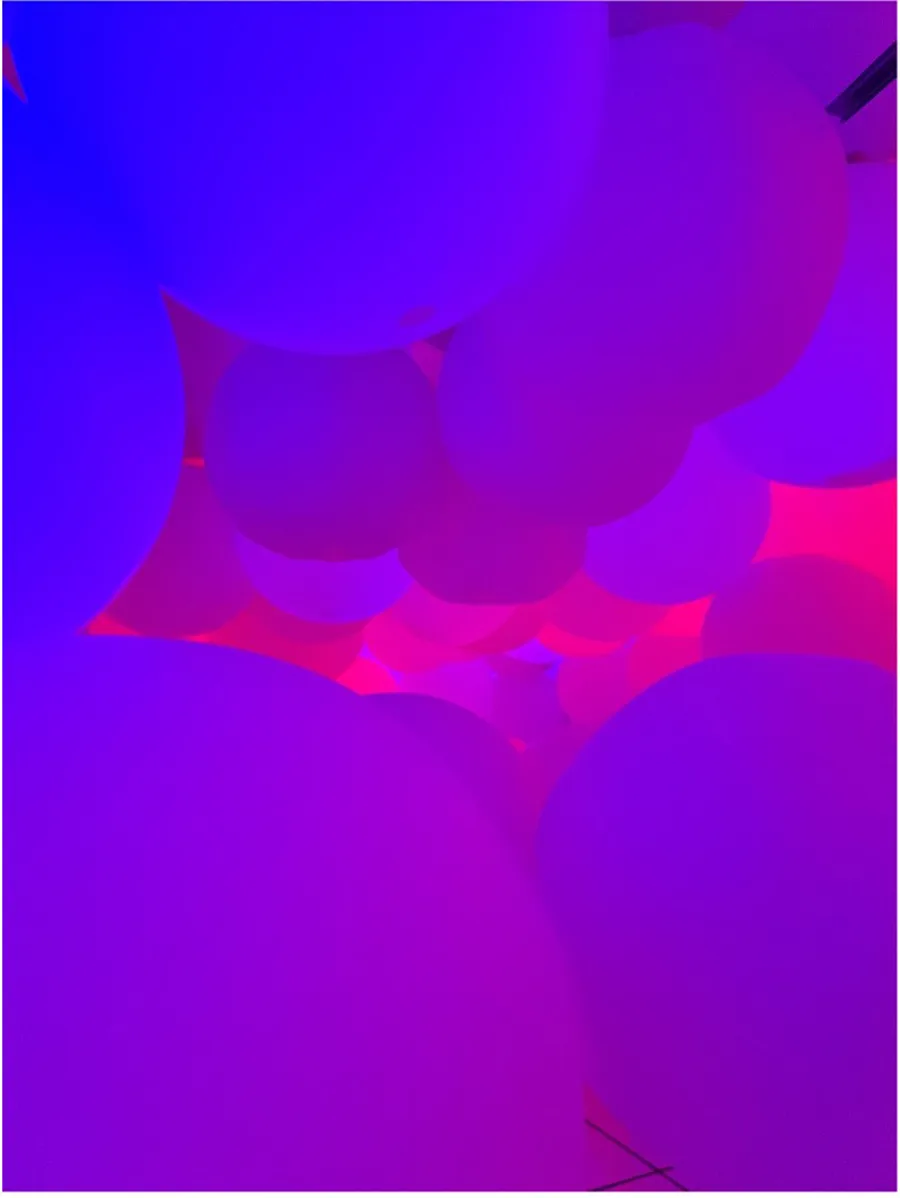
This was particularly true for the rooms in the water section, I felt that I could stand or sit there for a long time just watching the lights, the koi fish, and the flowers moving and changing. Even though the experience was overstimulating, new, and I had to walk on my sprained ankle without my boot, I was able to feel calm and relaxed. I believe that the whole experience was designed to create this feeling. In Japan the two main belief systems are Buddhism and Shintoism, and both encourage mindfulness, relationships with nature and harmony and this flows into all of Japanese culture.