Meiji Shrine and Senso-ji Temple: A Study In Contrasts
[Text and images by Program Director Luke Strosnider]
Tokyo contains multitudes. Over the course of two consecutive afternoons our group experienced two of the city's most iconic sacred sites — and two very different versions of Japan.
One day found our group quietly wandering the wooded surroundings of Meiji Shrine, while the next day took us to the hustling, bustling neighborhood of Asakusa and the Senso-ji temple.
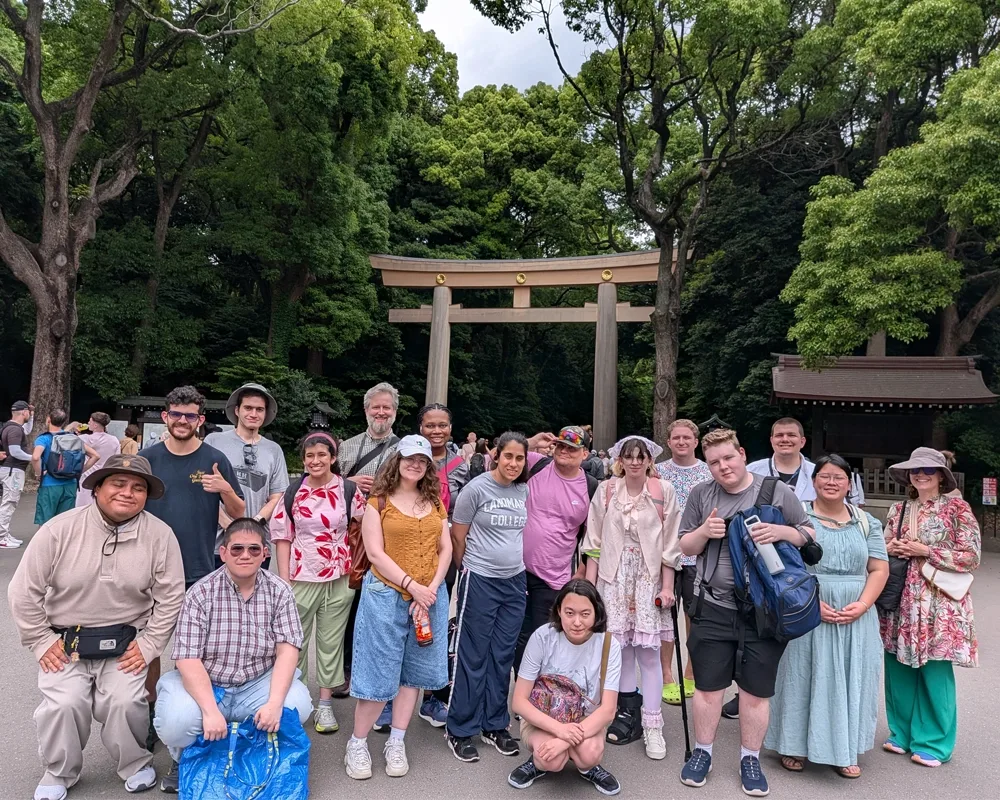
Meiji Shrine, tucked inside a sprawling forested park in the heart of the city, offers an almost immediate sense of calm. Walking a long gravel path beneath towering trees, the noise of the city fades away entirely. Prior to entering the shrine, visitors are offered the opportunity to perform a traditional Shinto purification ritual known as Temizu.
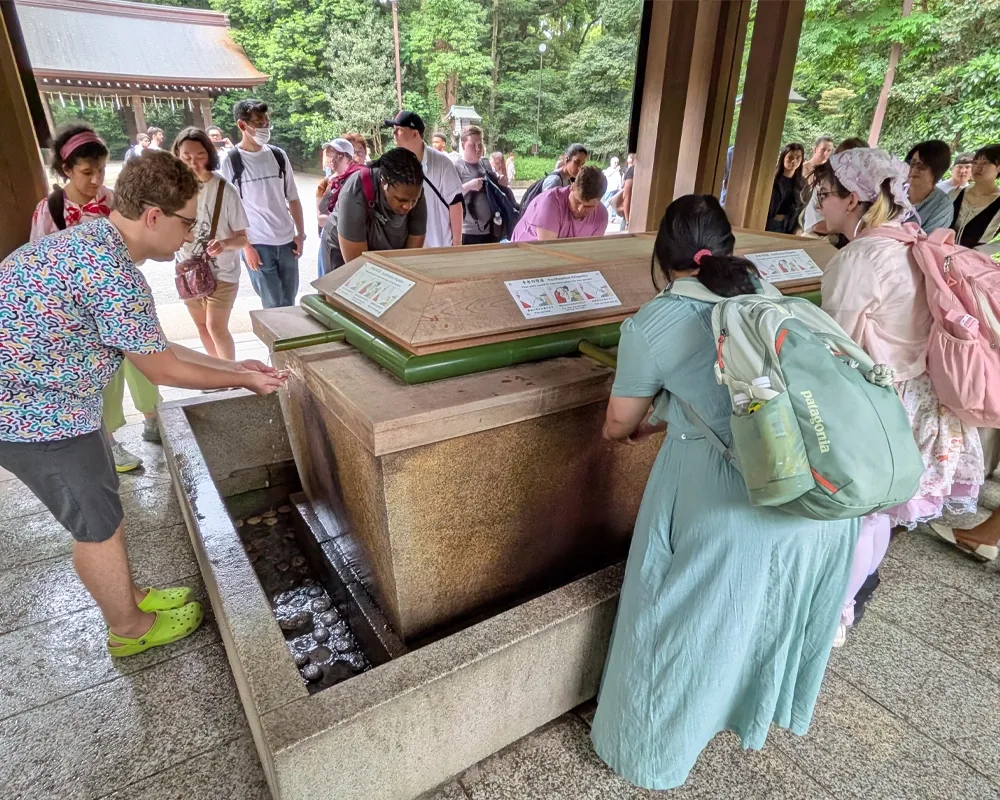
At approximately 170 acres, the forest that encompasses the grounds of the Meiji shrine creates the kind of quiet that asks you to slow down, to notice, to be present. For a course rooted in Japanese aesthetics, it felt like a living classroom. But a completely different experienced awaited us the next day.
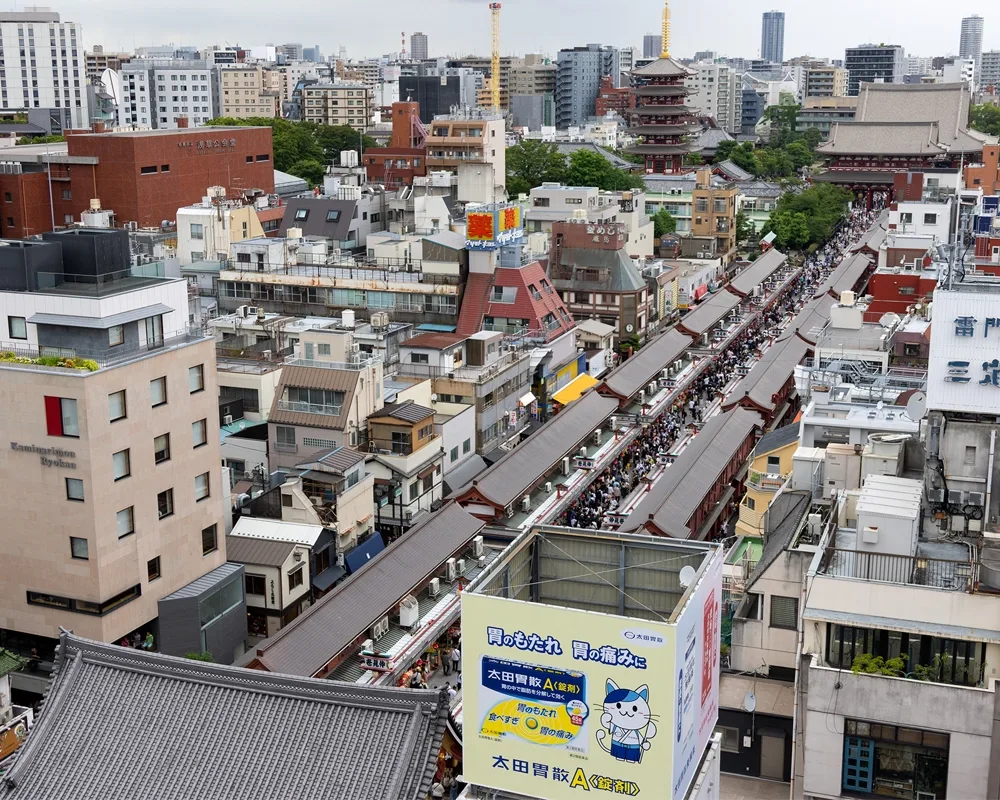
Senso-ji, Tokyo's oldest temple, could not be more different. Nakamise shopping street leads to the temple gate and is a chaotic blend of vendors, tourists, color, and noise. The energy here is a jarring contrast to the peace we found the previous day. But as the world around the temple continues to grow and change, the temple itself endures, ancient and unhurried, at the center of it all.
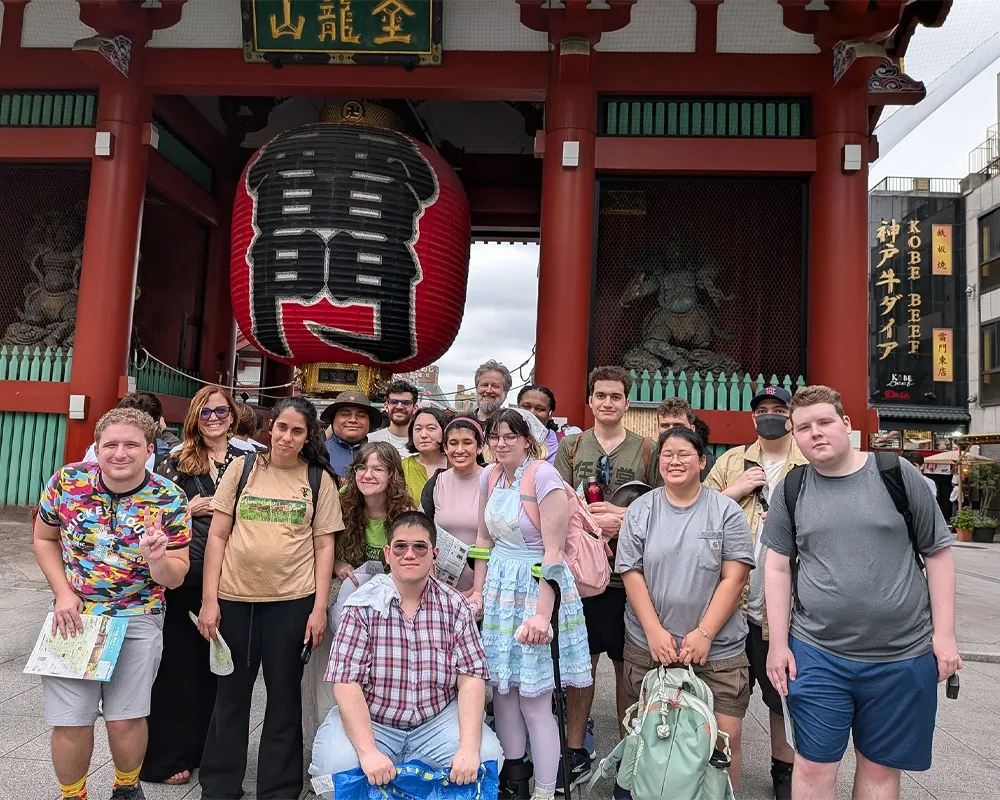
Two sacred spaces, each shaped by the same city, and yet worlds apart in feeling — a contrast that gave our group much to contemplate.