At Landmark College, where neurodiversity is front and center, instructors seek ways to accommodate students’ learning styles. For example, instead of completing a 20-page paper, students with learning differences that affect writing may have the option to create a PowerPoint presentation or video.
But with increasing requests for accommodations, instructors across the country face their own learning curve in keeping up.
“For professors, even at Landmark College, we struggle with this,” said Associate Professor of Communication Lee Crocker. “How much do we allow students to have accommodations because they want them or need them, and how much do we hold them accountable and try to push them out of their comfort zone?”
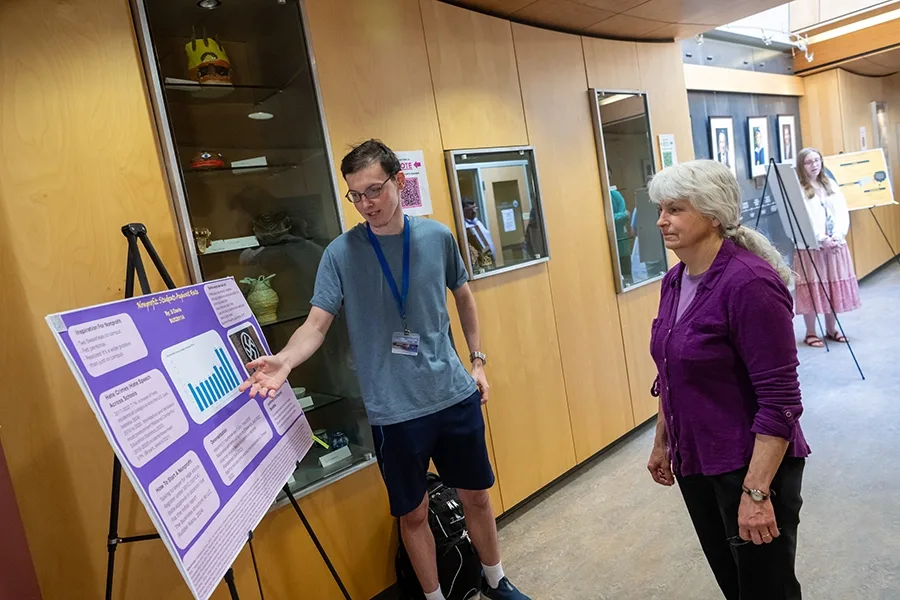
In a talk called “The Tension Among Rigor, Ableism, and Inclusion in Academica,” Crocker and Professor of Business Jeanette Landin explore what it means to find a balance between classroom rigor and accessibility. On Oct. 16, Crocker and Landin will present this talk in a 50-minute interactive session at the 2026 New England Faculty Development Consortium at College of the Holy Cross, Worcester, Mass. This year’s conference theme is “Neurodiversity: Broadening Our Lens.”
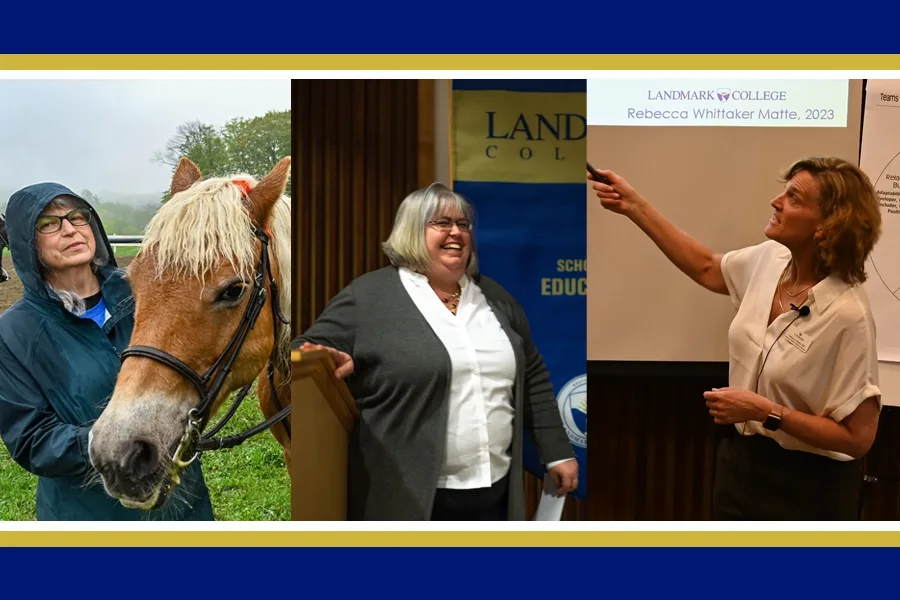
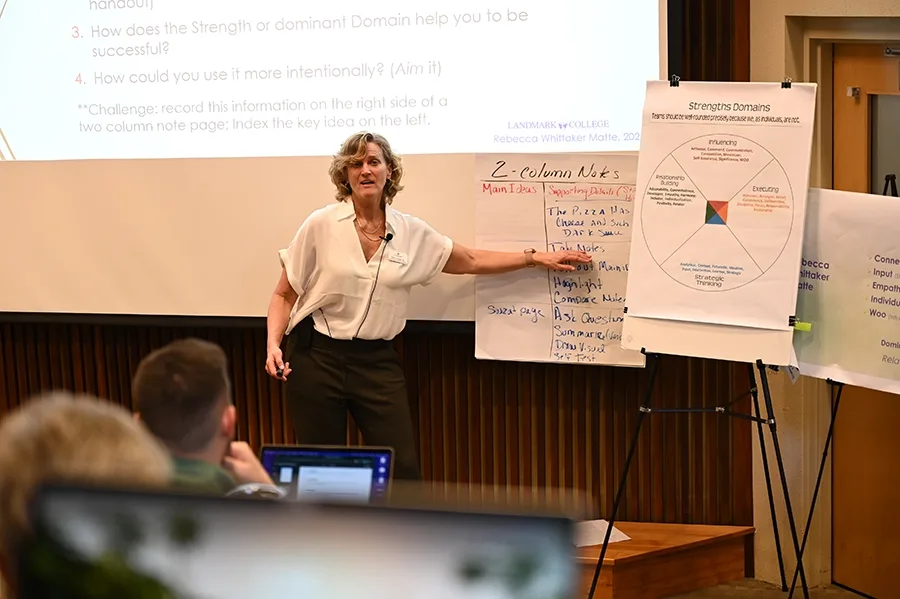
Landmark College Professor of Education Rebecca Matte will deliver the keynote speech, “Broadening Their Lens, Broadening Our Lens.” In this talk, Matte hopes to help educators reframe their understanding of cognitive diversity and accessibility.
“You're losing capable people and you have in the past lost capable students because they had accessibility issues,” Matte said. “Because more people are speaking up now, there’s the friction.”
Crocker and Landin said their presentation topic came out of side discussions about ableism and classroom rigor that they soon realized were worth researching.
“We want to make our degree worthwhile. We want to make it a challenge, but we don’t want unnecessary barriers,” Crocker said. “If you’re ableist, you have a bias towards people who are able-bodied or able-minded, and you think that people with differences can’t do it.”
Because Landin’s doctoral dissertation centered on inclusion, her research for this project focused mainly on what it means to provide reasonable accommodations.
“I come in on: How do we include everyone?” Landin said. “What are ways that we can accommodate needs so that we do hit the learning outcomes, but everybody can be included?”
Crocker’s research focused more on what constitutes academic rigor, and when and how it should be applied. For example, she said, there is “old rigor” and “new rigor.”
“‘Old rigor’ is: You’ve got to get up and be in class at 7:30 in the morning every day. You’ve got to write 20-page papers,” Crocker said. “In ‘new rigor,’ that’s not rigor. That’s just making people do things that are unreasonable.”
She gave the example: While a doctor may need to do rounds at a hospital very early each morning, being a college student doesn’t necessarily require the same structure.
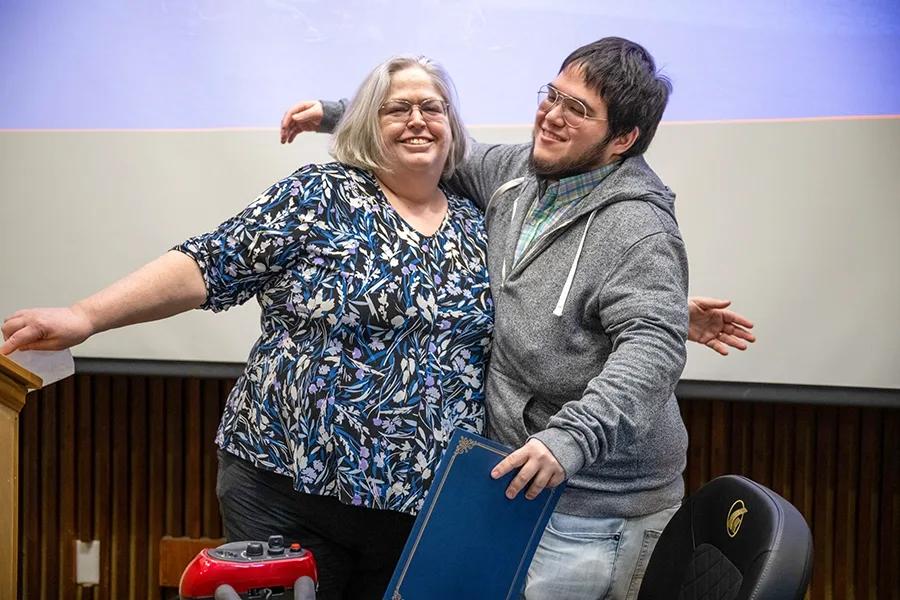
“Quality rigor is taking away barriers that prevent students from succeeding, but keeping the aspects of the learning objectives that the student has to attain,” Crocker said.
Crocker and Landin originally presented this talk to the LCIRT Summer Institute in 2023, and are excited for the opportunity to present their updated research and to expand their audience.
“I look forward to the discussions that we’re going to have,” Landin said. “We’re going to do some audience polling to get their thoughts and answer their questions, so I really look forward to what questions people have about this.”