Landmark College Faculty and Experts Release Two New Books on Neurodiversity
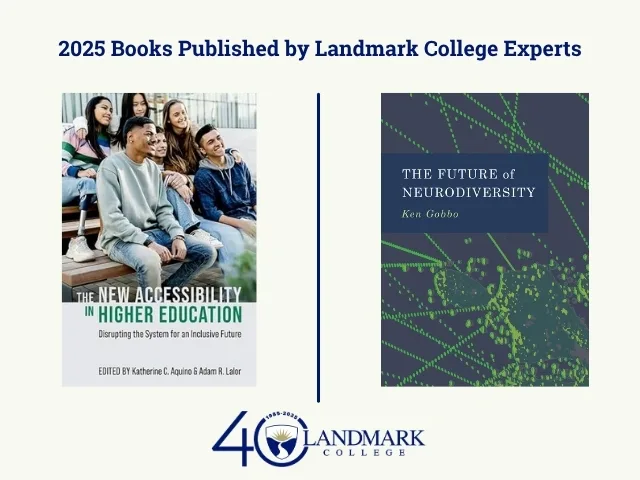
The first half of 2025 saw the publication of two new books from Landmark College faculty and experts. Each volume analyzes the past, present, and future of the neurodiversity community and movement from varied vantage points, making timely contributions to the burgeoning field.
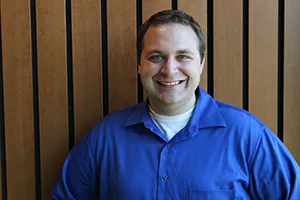
Dr. Adam Lalor, Vice President of Neurodiversity Research and Innovation, is co-editor alongside Dr. Katherine Aquino of The New Accessibility in Higher Education: Disrupting the System for an Inclusive Future, published by Oxford University Press of Cambridge, England.
The book reflects upon advances made over the last 15 years in post-secondary accessibility for disabled people and neurodivergent learners. Dr. Lalor describes the collection of authors featured in the book as "robust and highly respected," and hopes that the book will "serve as a forward-looking piece that will help guide our field of postsecondary disability into a brighter future."
For most of the history of higher education, “we’ve been scratching to achieve the minimum threshold of federal law,” Lalor says. While colleges have now met those standards, Lalor highlights efforts to "go beyond the minimum threshold of compliance, to try to offer more programs and opportunities that will facilitate success, not just access."
The book offers thoughts on how higher education leaders can holistically integrate inclusive principles across institutions, rather than siloed within disability services departments.
The New Accessibility also discusses trends and challenges facing students and institutions alike, especially coming out of significant events such as Covid-19 and the growth of social justice movements among young people. Lalor says that colleges today are currently enrolling “the most activist minded students since the civil rights movement. They grew up protesting about gun rights, Black Lives Matter, the #MeToo movement."
In thinking about the path forward for the disability rights movement, Lalor says that "we need to see how we intersect with other movements, because a rising tide of equity lifts all ships.”
Learn more about The New Accessibility.
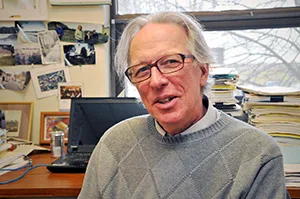
Ken Gobbo, Professor Emeritus of Psychology, wrote The Future of Neurodiversity published by Ethics Press of Cambridge, England. The Future of Neurodiversity examines the history of the neurodiversity movement and chronicles the emergence of neurodiversity as a culture.
In the growth of a neurodiverse culture, Gobbo draws parallels to the deaf culture’s emergence in the 1980’s. “More and more people neurodivergent people are seeing that neurodivergence as part of their identity, of who they are," Gobbo says.
The rise of new technologies and ways to communicate, especially across distance, has accelerated the growth of that culture. "As you get a critical mass of people who identify that way, and who can now communicate with one another more easily via the internet, neurodivergent individuals started to view themselves as more of a community.” The book highlights how these developments have made it easier for members of the neurodivergent community to organize and advocate.
Gobbo also points to the increasing cultural awareness of those who have helped mainstream diagnoses and concepts of neurodiversity, pointing to "so many neurodivergent exemplars—Nobel Prize winners, entrepreneurs, writers, actors, politicians, activists, athletes, and more.”
In the book, Gobbo discusses emerging controversies related to the neurodiversity movement, examining current trends and possible outcomes related to opposing views on matters central to the movement.
“There are controversies around diagnosis methods, how research agendas are established, the role of gender in neurodivergence—and there are differences within the neurodiversity community on these issues," Gobbo says, including "on questions like ‘who is neurodiverse?’ or ‘who is in the neurodiversity community?’”